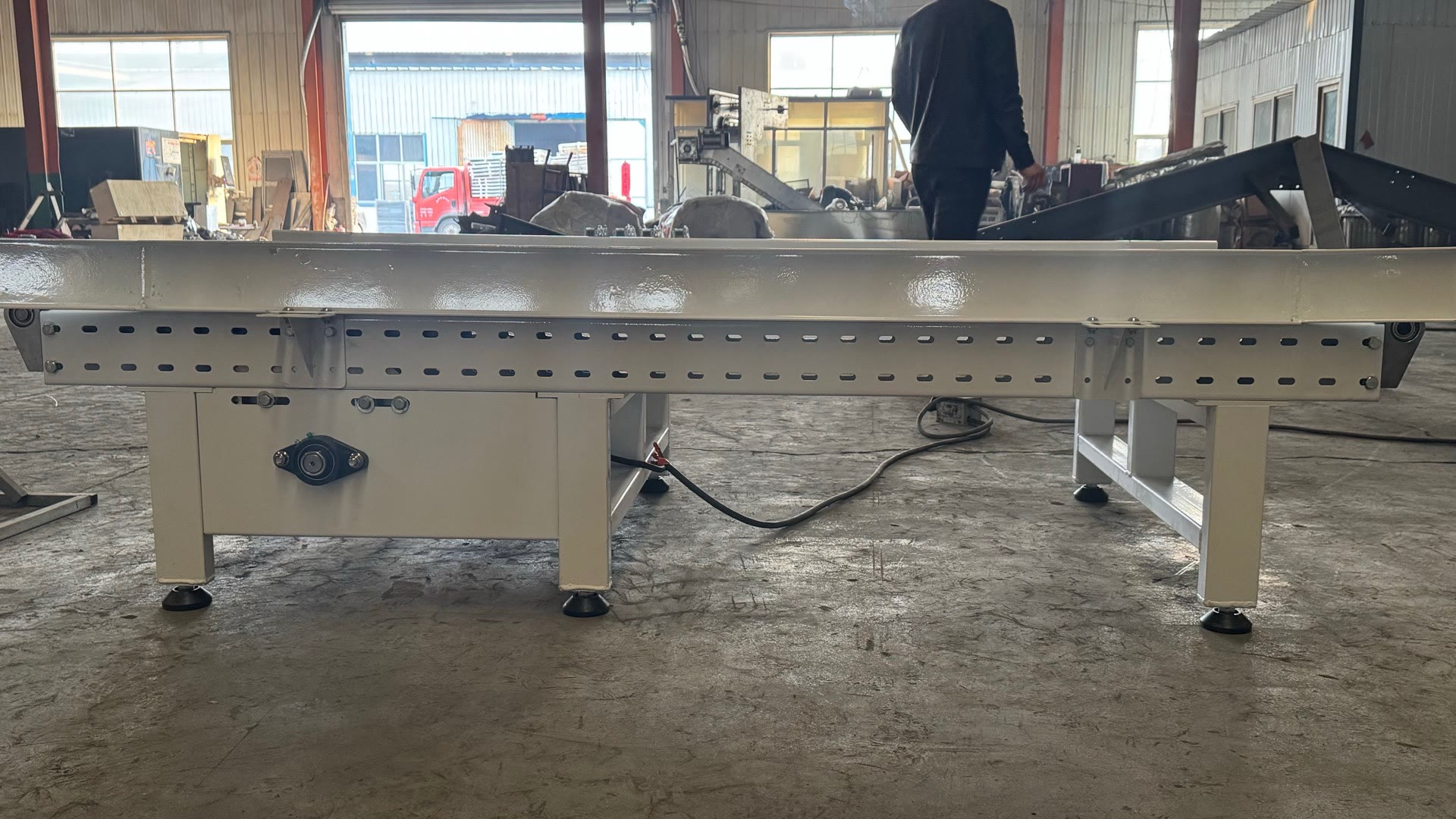
Practical, safety-first notes on inspection, lubrication, cleaning and selection — general guidance only.
This page is general guidance on care and application. It does not replace the specific machine's instruction manual, the manufacturer's maintenance manual or your site's safety procedures. Work is for trained personnel only: stop the machine, isolate all energy, lock out and tag out against unexpected start-up, release or control residual energy (air, fluid, electrical, gravity) and verify it is safe before working. Never touch moving parts, adjust anything or remove guards while the machine is running. Lubricant type and interval, tension settings, temperature and cleaning method follow the machine manufacturer's manual and your site rules — no figures are given here. Plastic chain is not oiled by default; in food-contact areas any lubricant must meet the applicable food-safety requirements.
Daily checks on a slat chain conveyor are mainly visual with the machine stopped; while it runs, only observe from a safe distance.
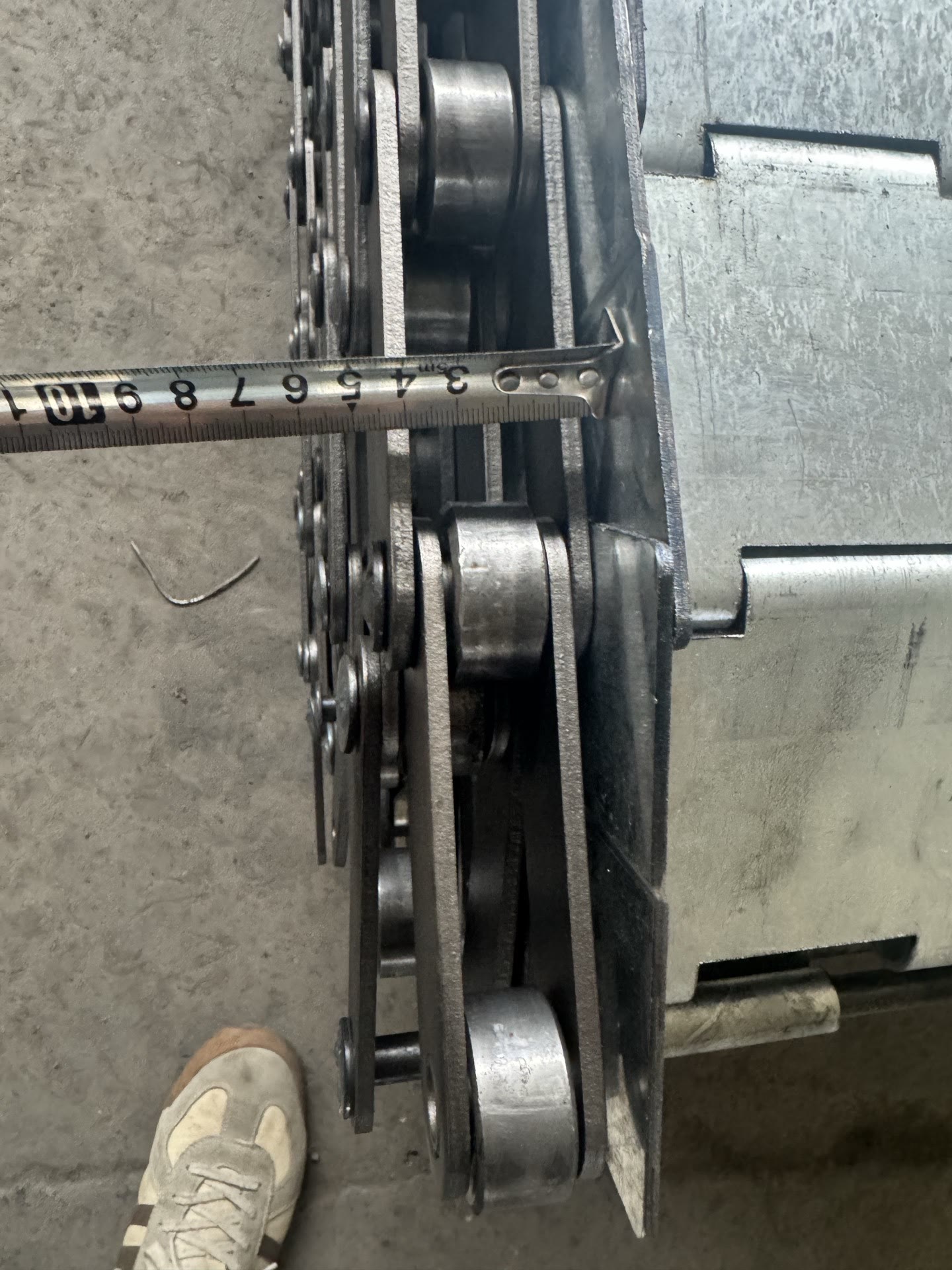
Before start-up, walk the conveyor and confirm visually that the slat surface has no distortion, lifting, cracks or trapped foreign objects, and that the joints between slats are not obviously loose — observe only; never push or hand-manipulate the chain. While running, keep a safe distance and listen for abnormal impact noise, periodic jams or juddering. After stopping, isolating all energy and verifying it is safe, trained personnel check — following that machine's manual — that pins and connecting parts are not loose and that rails and guards are not worn or skewed, and they judge tension from the manual's tension indicators; do not assess tension by pushing the chain by hand. Tension travel, chain elongation limits and lubrication requirements follow that machine's manual — do not set figures by rule of thumb.
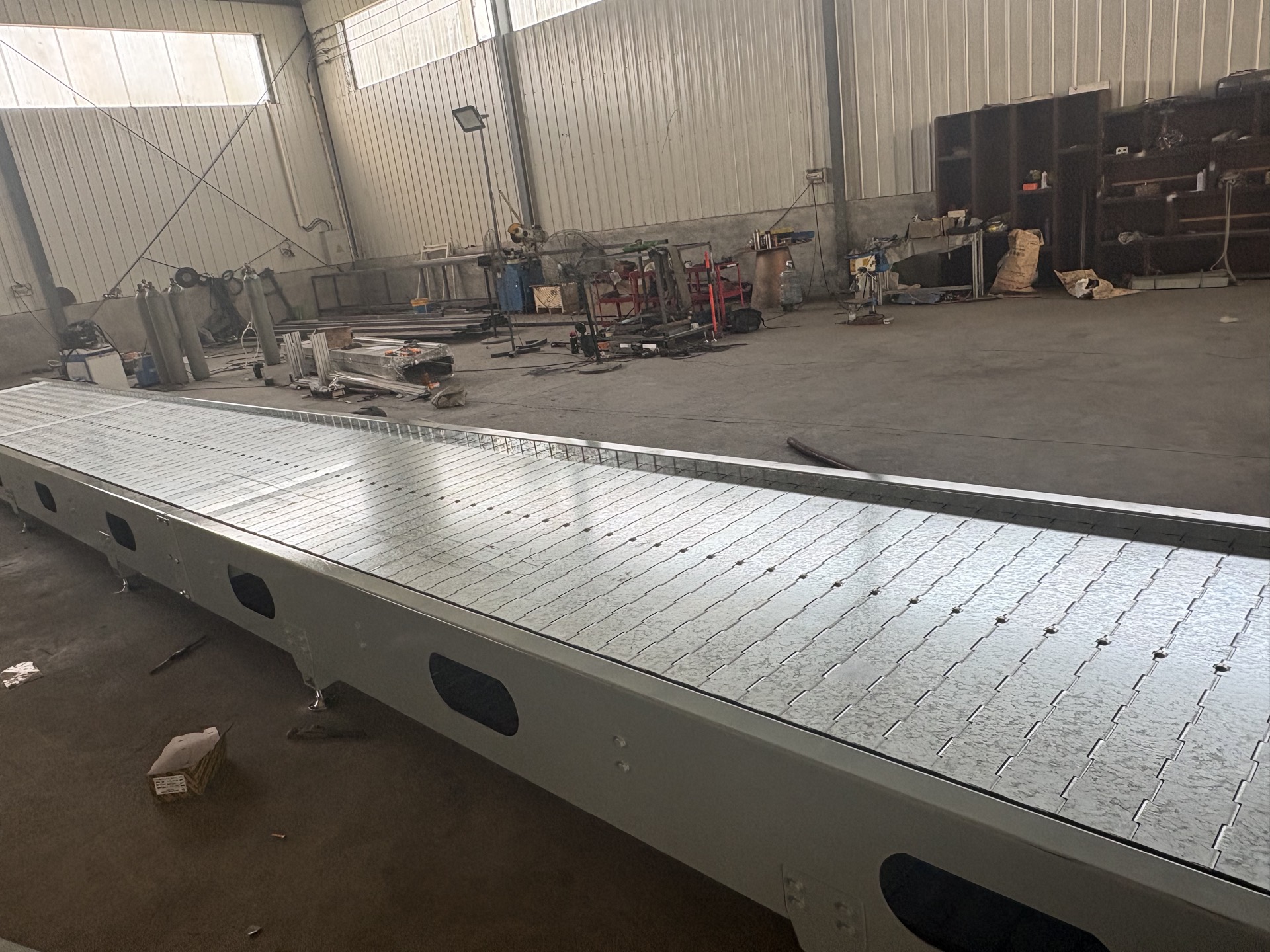
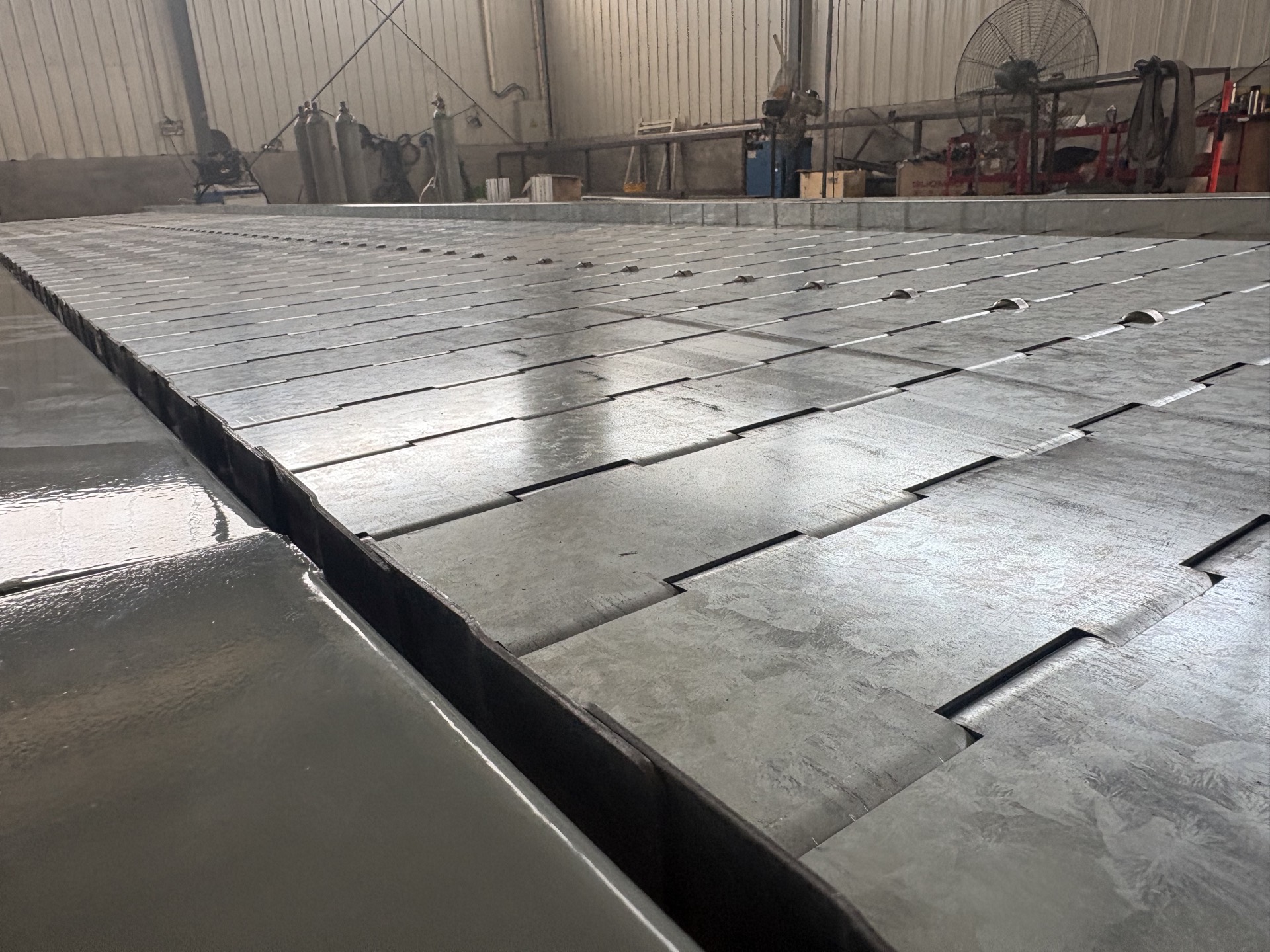
Lubrication reduces hinge wear, carries away some heat and limits corrosion, but not every chain needs frequent oiling.
Plastic chain is not oiled by default; in food-contact or high-hygiene areas, if lubrication is genuinely required, use a food-grade lubricant that meets the applicable rules and avoid drips that could contaminate product. Before applying anything, confirm the lubricant type, application points and interval specified by the manufacturer — do not substitute a lubricant the manufacturer has not confirmed, waste oil or an unknown grease. Never reach in or apply lubricant while the machine is running. With automatic lubrication, check that the oil lines are clear and leak-free; manual lubrication is done after stopping and isolating, using a controlled amount so oil does not accumulate and trap dust. If noise increases or a chain link heats up after lubrication, stop and inspect.
When a roller conveyor misbehaves, observe and record first, then make only safe, preliminary checks.
Typical signs include a roller that will not turn, turns stiffly, gets noisier, warms up locally, lets product drift or pile up, or collects material on its surface. After stopping, isolating all energy and verifying it is safe, trained personnel check — following the manufacturer's manual — whether a roller is jammed by stretch film, string or debris and clear it without damaging the shaft end or seal; bearing condition and play are judged per the manual, not by hand-turning the rollers. On powered rollers, also check that drive chains or belts are tight and not loose. A failed bearing, a failed seal or a distorted shaft end needs professional repair — hand it to the manufacturer or a specialist; do not disassemble or press parts yourself. Parameters and replacement intervals follow the manufacturer's manual.
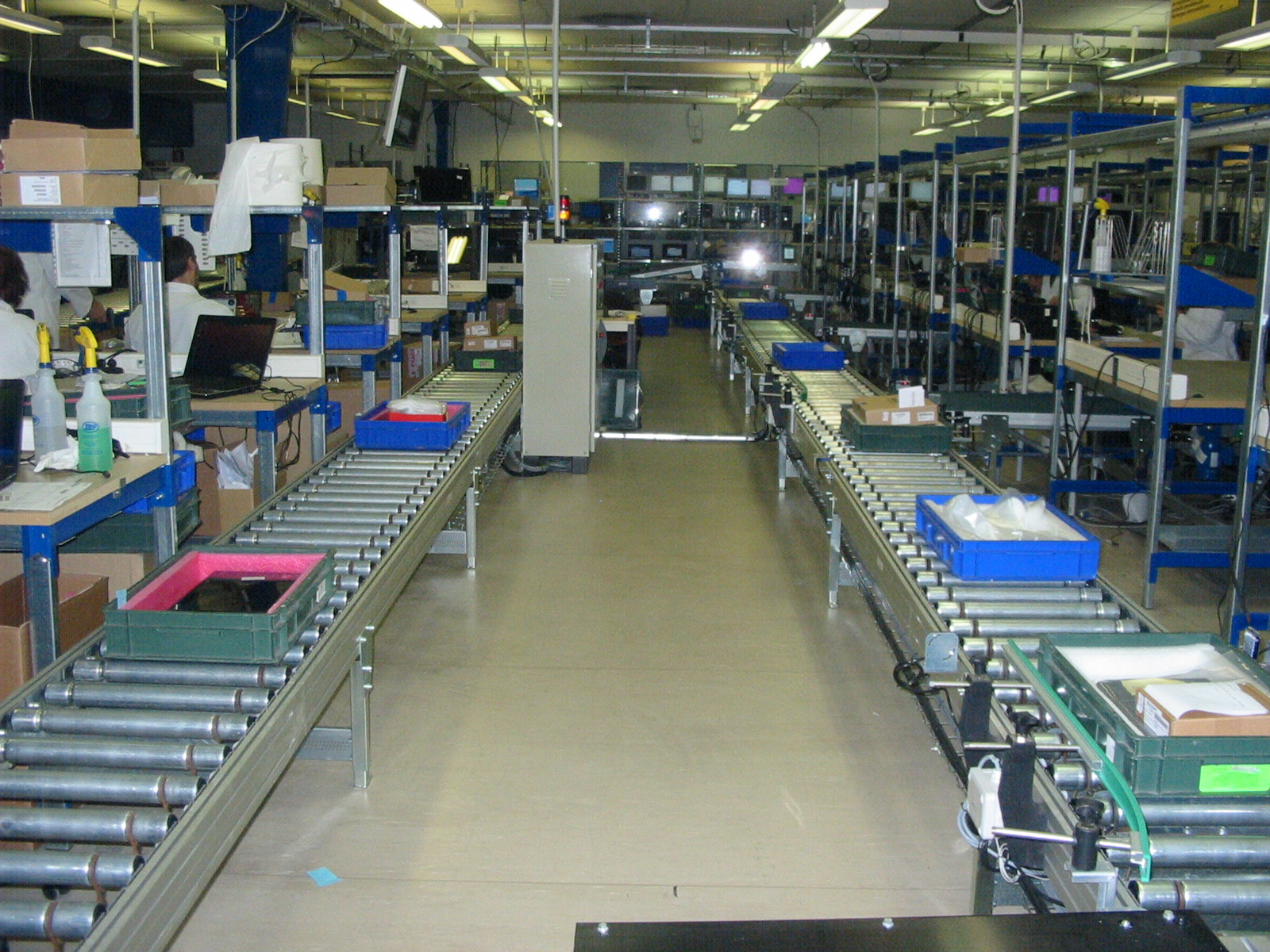
Belt mistracking is usually linked to uneven tension, rollers or pulleys that are not parallel, a skewed frame, off-centre loading or material sticking to the belt.
Observe from a safe distance where the belt sits at the head and tail pulleys, how far it drifts and whether it swings periodically from side to side. After stopping and isolating, check whether the belt is centred, whether it has local cuts or edge wear, whether idlers turn freely and sit square to the direction of travel, and whether material builds up on pulley faces; if a scraper, chute or skirt board interferes with the belt, correct that first. Tracking adjustment is done with the machine stopped and step by step as the manufacturer specifies — never reach in while it runs. If the belt keeps mistracking, the edge has torn or the splice area heats up, stop using it and contact the manufacturer.
Clean mesh belts and mesh chains without damaging the wires or the joints.
After stopping, isolating the energy and letting the belt cool to a safe temperature, remove residual product and debris first, without scraping the mesh with hard tools or pushing foreign objects into the joints. The cleaning method — water washing, spray pressure, cleaner type, temperature and frequency — follows the belt manufacturer's cleaning instructions and your site's hygiene rules; do not raise the pressure or use aggressive chemicals on your own. After cleaning, check the wires for broken strands, distortion or failed welds, the edges for wear, the belt for binding or mistracking, and the joints for smooth movement; on food lines also confirm no cleaner residue remains. If broken strands spread or the structure loosens, stop using it and contact the manufacturer rather than welding or patching it yourself.
When selecting modular conveying equipment, confirm the product and the working conditions first, then the structure and configuration.
Tell the manufacturer the product's weight and dimensions, whether it moves as single items, in groups or as bulk, and how it contacts the belt; the process temperature, humidity and cleaning requirements (wash-down, corrosion or oils); and how the turns and transfer points connect to upstream and downstream equipment, including the turning radius needed. Also assess maintenance space and running cost: whether servicing needs a shutdown, whether spare parts are easy to obtain, and whether modules and components can be replaced individually. On plastic modular belts, the return-side sag changes with temperature and load and must be compensated as the manufacturer advises; damaged modules, connecting rods, sprockets or wear strips should be dealt with promptly, and cleaning follows the equipment manufacturer's instructions. Make no promises about parameters or certifications until they are confirmed.
The OSHA page is cited only as a recognised energy-isolation safety principle. It is not a statement that it applies in China — follow your local regulations and site procedures.
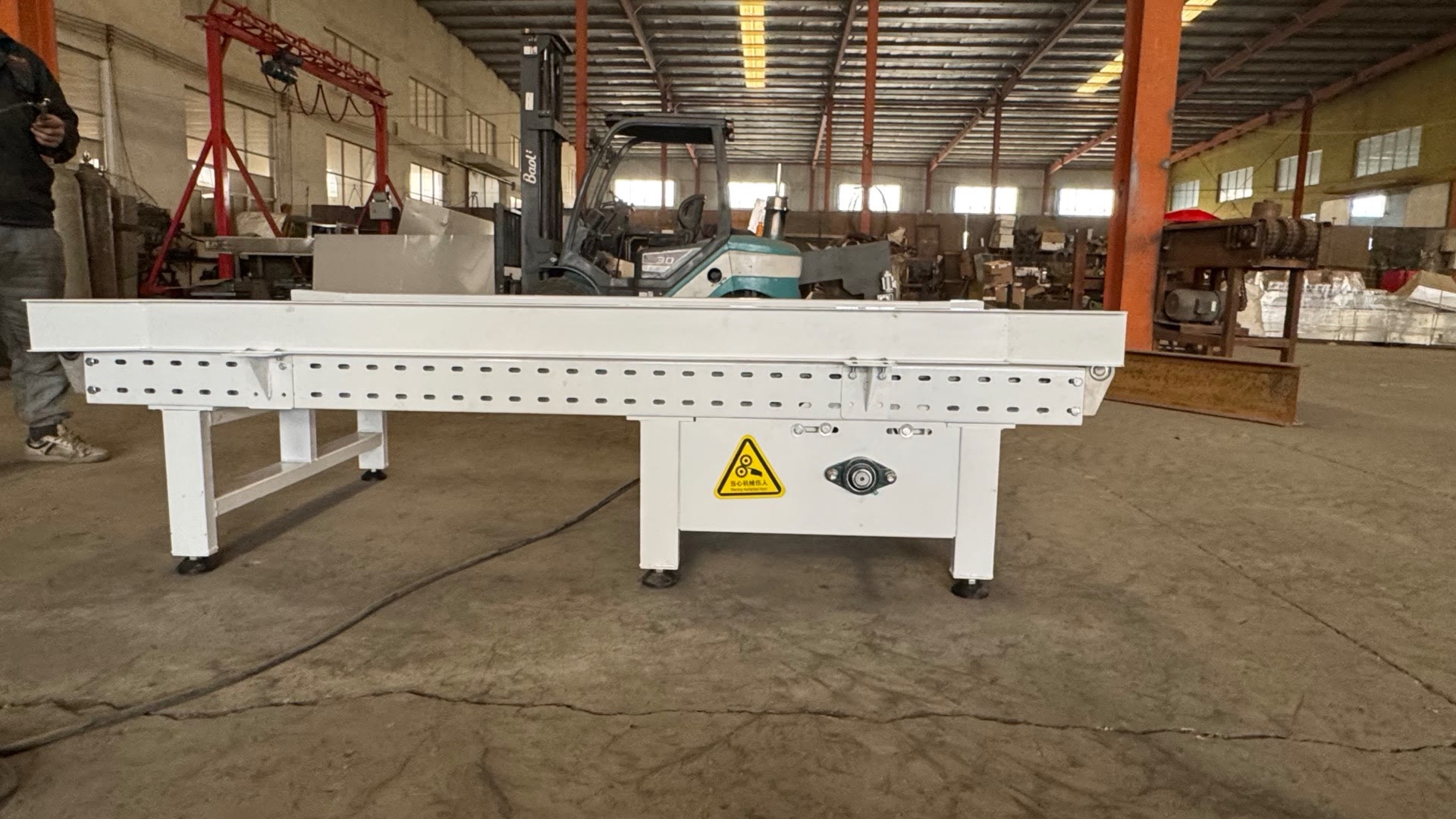
Tell us your machine, product and working conditions — we will confirm the configuration before anything is quoted.
Practical, safety-first notes on inspection, lubrication, cleaning and selection — general guidance only.